How Do Penguin Parents Take Care of Their Babies
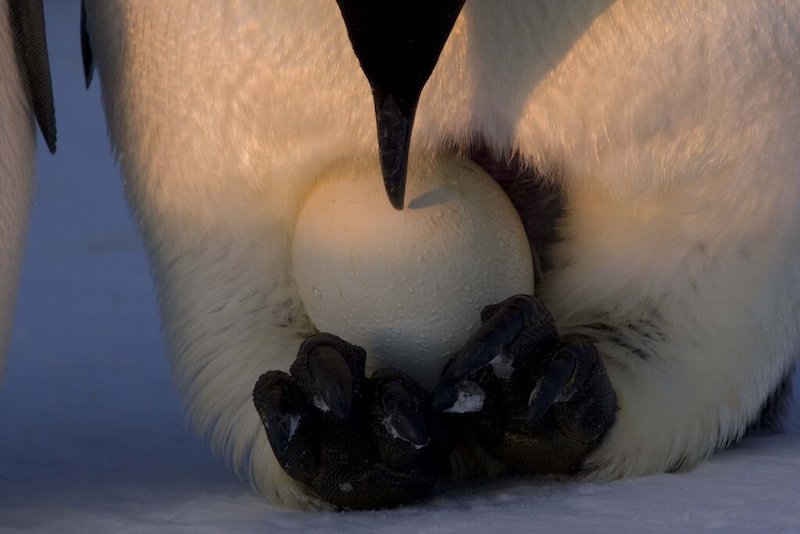
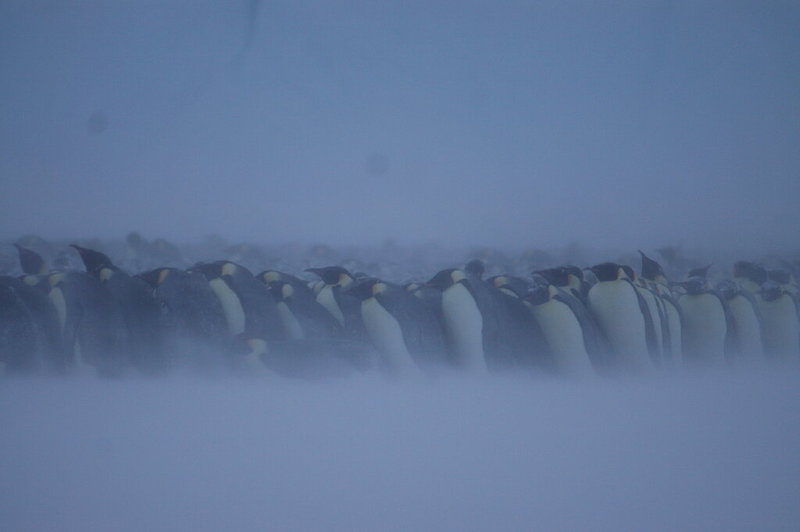
We know at that place are some crawly dads out there amid you humans. But the nominees for best dad must surely include emperor penguin males, who go to extraordinary extremes for their offspring, enduring bitter cold and darkness during winter on Earth's coldest continent, Antarctica. Information technology's winter in Antarctica now. If you could visit, you'd discover emperor penguin males gathered in colonies near the coast. They're tightly huddled together to stay warm in temperatures that can dip as low as -40 degrees F (-40 degrees C), with winds as strong equally 90 miles per hour (144 km/ hour). For the next two months, these devoted dads will each incubate a unmarried egg that holds his offspring. Each dad will also intendance for his chick when information technology offset hatches. Penguin dads do all this while surviving just on fat reserves from the previous summer.
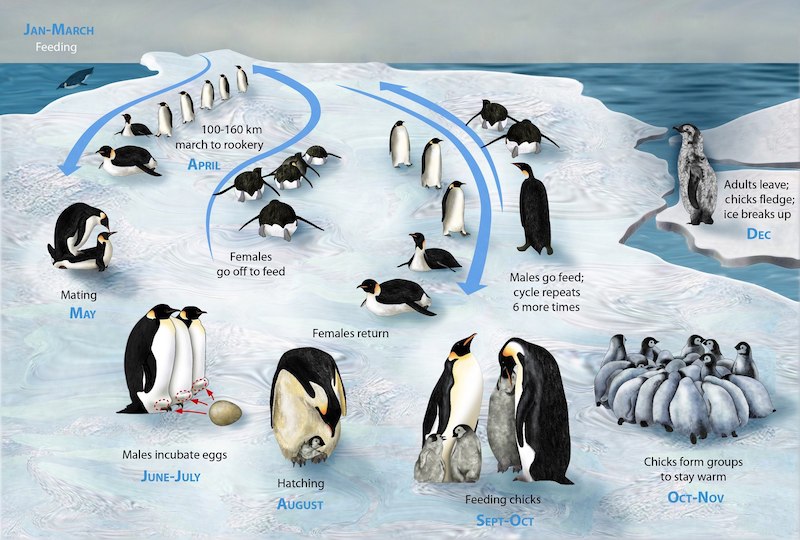
For much of the summer, male and female emperor penguins are at ocean, feeding on fish, squid, and krill. For the males, it'southward an opportunity to accrue fat reserves they'll need to survive in winter.
In Apr, fall in the Southern Hemisphere, developed emperor penguins brainstorm congregating at their respective nesting areas, traveling inland as much as thirty to 75 miles (50 to 120 kilometers) from the pack ice.
Following courtship displays, the birds form pairs and mate. In May and early June, the female person lays a single egg. The egg is pear-shaped with a pale greenish-white tint, near v inches long and three inches wide (12 and 8 cm, respectively). The female penguin passes the egg to her mate, then heads back to ocean. She'll be dorsum in two months to go on her parental duties.
Until and then, the males are on their ain for winter in Antarctica. Their dense insulating feathers and fat accumulations, all the same, aren't enough to keep them alive. To conserve heat, the emperor penguin males huddle close together. Each colony varies in size, and could number several hundred birds. They take turns moving from the edge of the colony, which is colder, to the warmer center.
The egg, meanwhile, is snugly tucked away in dad'due south brood pouch, resting on his anxiety. If all goes well, the chick will hatch in 65 to 75 days. Hatching will likely happen a few days before mom returns. During this time, the chick, weighing just eleven ounces (312 grams) with only a sparse layer of down feathers, is completely dependent on dad for warmth and protection. Until mom returns to start feeding the chick, he also provides his offspring with what's called crop milk, a loftier fat and poly peptide secretion.
Mom returns to the colony, quondam between mid-July and early on August, subsequently spending the last two months feeding at bounding main. She takes over caring for the chick while dad, having not eaten for nearly 120 days, heads to the ocean to start feeding. By at present, he has dropped in weight to around 50 pounds (23 kilograms) from his summer weight of about 84 pounds (38 kilograms).
Dad will spend about three to iv weeks feeding at sea, then return to his mate. From then on, the pair takes turns caring for their niggling one, keeping information technology warm and feeding information technology regurgitated krill, fish, and squid.

Near 50 days afterward hatching, the colony's chicks, at present sporting a thick downy glaze, are corralled together for warmth and protection in what'due south called a crèche – that'south emperor penguin daycare where the chicks look for their parents to return from the sea to feed them.
In early November, every bit spring yields to summer in Antarctica, the chicks undergo a 2-month moult, replacing their featherlike chick feathers with juvenile plumage that will enable them to swim.
By December and January, the chicks are nearly equally big as their parents. At this point, mom and dad have done their job and will stop feeding the kids. The youngsters will then venture to sea to start foraging on their ain. In nearly three to four years, they volition be old enough to start breeding.
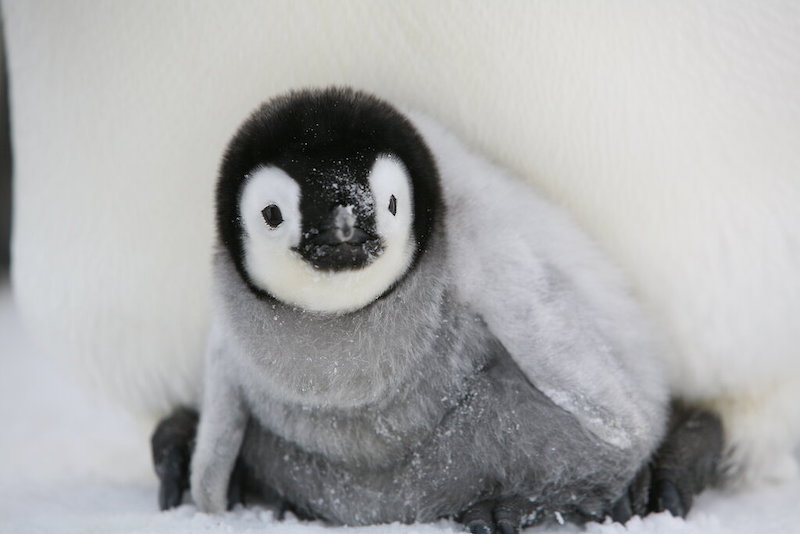
Bottom line: Male emperor penguins are some of the best dads in the world. They incubate their eggs for over two months in the frigid Antarctic winter.
Source: https://earthsky.org/earth/male-penguin-eggs/

Post a Comment for "How Do Penguin Parents Take Care of Their Babies"